


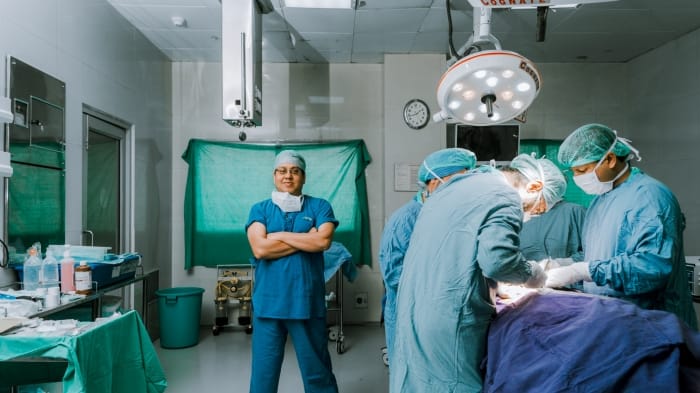
Colorectal surgery, Dubai & Sharjah
A sudden change in bowel habits can be concerning, like an unsettling lump or blood in the stool, so you should not take these signs lightly. Dr. Ghosh is a trusted colorectal surgeon in Sharjah with over 25 years of experience, and he has already done 5000 colorectal surgeries. This means you will get a quick diagnosis of what treatment you need, how soon you need it, or if you are just having a minor issue.
During the first consultation, you will get a clear idea of whether you need surgery and how long it will take to recover. You get diagnosis and treatment from one colorectal surgeon in the UAE.
Start with the symptom
If you are experiencing any of the symptoms that are mentioned below, then you must consult a doctor to provide you with valuable insights regarding treatment.
Do not wait it out
Colon Cancer
Colon cancer surgery is managed with a clear plan from diagnosis to the final stages of treatment to handle early polyps and established cancer.
Rectal Cancer
The rectal cancer surgery offers safe treatment while preserving bowel function and continence.
Haemorrhoids (piles)
Swelling in the veins of the anal canal can cause pain, bleeding, and prolapse, so we offer a safe surgical option.
Anal Fistula
An abnormal tunnel near the anus after an abscess is treated to clear infection and protect the sphincter.
Anal Fissure
A small tear in the anal lining that causes sharp pain and bleeding, usually managed without major surgery.
Crohn's Disease
Crohn's disease surgery handles the inflammation, which can affect any part of the gut, and also treats strictures, fistulas, and complications.
Ulcerative Colitis
Inflammation of the colon and rectum is treated with ulcerative colitis surgery to remove the colon, which is a long-term cure.
IBS
A functional bowel disorder with no inflammation, where the priority is an accurate diagnosis before anything else.
Rectal Prolapse
When part of the rectum slips out through the anus, rectal prolapse surgery fixes it to restore support and function.
FAP
Familial adenomatous polyposis, an inherited condition with many polyps that needs close surveillance and planned surgery.
Rectovaginal Fistula
An abnormal connection between the rectum and vagina, repaired with careful, often staged, reconstructive surgery.
Conditions of the anus such as recurrent piles, fissures, and fistulas are managed in detail through our dedicated proctology service for haemorrhoids, fissure, and fistula, with comfort and faster recovery in mind.
One of the first questions patients ask is whether they need surgery or not. Often the answer is no. Many colorectal problems respond to medication, dietary changes, or a minor outpatient procedure, and surgery is reserved for when those steps are not enough, or the diagnosis demands it.
Non-surgical Treatments
Surgical Treatments
Where an operation is needed, the aim is the smallest and most precise approach that does the job. Keyhole and robotic techniques usually mean less pain, smaller scars, and a quicker return home than open surgery, as explained in this patient guide to minimally invasive and robotic surgery in the UAE. For cancer, the principles of a modern colorectal cancer resection are to remove the disease completely while protecting bowel function and quality of life.
For some people with ulcerative colitis, removing the diseased colon is a genuine cure. To avoid a permanent bag, the surgeon can create a new reservoir from the small intestine, shaped like the letter J, which is connected to the anus. This J-pouch lets you easily pass stool without any discomfort until complete healing. The pouch surgery for ulcerative colitis is done in phases to ensure the new pouch can safely settle. For a successful surgery, the surgeon's experience is crucial, so we provide that.
These three may sound confusing because the names sound similar and the symptoms overlap, but they are treated differently. Crohn's disease and ulcerative colitis are inflammatory bowel diseases, where the gut is inflamed and can be seriously damaged. By contrast, irritable bowel syndrome (IBS) is a functional disorder. It causes discomfort but does not inflame or scar the bowel, and it does not require surgery.
| Crohn's disease | Ulcerative colitis | IBS | |
|---|---|---|---|
| Where it affects | Any part of the gut, mouth to anus | Colon and rectum only | Whole bowel, function only |
| Inflammation present | ✓ | ✓ | × |
| Role of surgery | For complications and strictures | Can be curative (remove colon, J-pouch) | Not a surgical condition |
| Long-term cancer risk | Raised, needs monitoring | Raised, needs monitoring | Not increased |
Getting this distinction right is the point of a proper assessment. Crohn's disease surgery and ulcerative colitis surgery are reserved for inflammation that medicine cannot control or for complications.
Patients do not fear the operation as much as they fear the unknown threats. Questions like how many nights in hospital, when they can work again, and what they can eat builds anxiety. The ranges below are typical guides. Your own plan depends on the procedure, your general health, and how the surgery goes. You will also be given written instructions.
| Procedure | Hospital stay | Back to work | Follow-up |
|---|---|---|---|
| Colonoscopy with polyp removal | Day case, no overnight | 1 to 2 days | Results review in 1 to 2 weeks |
| Laparoscopic colectomy | Typically 3 to 5 nights | About 4 to 6 weeks | Staged checks, then surveillance |
| Haemorrhoid surgery | Day case or 1 night | About 1 to 2 weeks | Single review at 4 to 6 weeks |
| J-pouch surgery | Planned in stages | Several weeks per stage | Ongoing pouch monitoring |
Keyhole and robotic procedures make the recovery easier than open surgery, while a light, gradually expanding diet and early gentle walking help the bowel wake up sooner.
Prevention
Colon cancer starts as a harmless growth called a polyp. Removing polyps before they turn cancerous is one of the methods to treat it, while routine tests can genuinely prevent a serious disease.
If you are weighing up when to be checked, this surgeon's guide to colonoscopy screening in Dubai walks through who is at risk and what the test involves.
Consultation
We review your symptoms and history, and examine you to determine the root cause.
Diagnosis
Blood and stool tests are taken to gain clarity regarding the issue.
Colonoscopy or Imaging
A colonoscopy, CT, or MRI helps to determine the actual cause of issue and confirms the diagnosis.
Treatment Planning
We explain every treatment option, including surgical and non-surgical, and also provide our recommendations that suit you.
Surgery, if Required
If an operation is needed, it is done with the least invasive approach to ensure safety.
Recovery and Follow-up
We provide a clear recovery plan and scheduled reviews, so nothing is left at risk.
25+ Years of Experience
Decades of experience focused on the digestive system, so even complex cases are familiar ground.
5000+ Colorectal Surgeries
A proven track record in colon, rectal, and anal surgery, where experience is closely tied to outcomes.
DHA-licensed Specialist
Licensed to practise in the UAE, with fellowship credentials including Fellow of the American College of Surgeons.
Advanced Laparoscopic and Robotic Expertise
A strong minimally invasive focus, aiming for smaller incisions, less pain, and a faster recovery.
Dubai and Sharjah Consultations
Appointments across leading hospitals in both emirates, so care stays close to where you live.
Multilingual Consultations
Conversations in a language you are comfortable with, so you can ask everything you need to.
Locations & cover
For consultations and surgery, you can consdier three leading hospitals in Dubai and Sharjah and choose what is convenient.
Emirates Hospital Jumeirah
Dubai
Emirates Speciality Hospital, DHCC
Dubai
NMC Royal Hospital
Sharjah
Primary UAE insurers are accepted like DAMAN, BUPA Arabia, AXA Gulf, and Oman Insurance. Self-pay is also accepted. International and GCC patients travelling are supported who travels for treatment for travel arrangements and medical visa, so they do not have to bear extra stress.
No. Most rectal bleeding comes from harmless causes such as haemorrhoids or a small fissure. The problem is that bleeding can also be an early sign of something more serious, and the two can feel identical. That is why any bleeding that lasts beyond a couple of weeks, or comes with a change in bowel habits or weight loss, should be checked rather than assumed.
Often not. A large share of colorectal complaints are managed with medication, diet, or a minor outpatient procedure. Surgery is recommended when the diagnosis requires it, such as cancer, or when other treatments have not controlled the problem. You will always be told why an operation is being suggested and what the alternatives are.
If colon cancer is confirmed, treatment is planned around its stage. Early cancers and many polyps can be removed during or shortly after colonoscopy. Established cancer usually needs surgery to remove the affected segment of bowel along with nearby lymph nodes, often by keyhole or robotic technique, and some patients also need chemotherapy. The aim is complete removal while protecting bowel function.
Both are forms of inflammatory bowel disease. Crohn's disease can affect any part of the digestive tract and tends to appear in patches, while ulcerative colitis is limited to the colon and rectum. Surgery for Crohn's disease usually treats complications, whereas for ulcerative colitis, removing the colon can be a long-term cure, sometimes with a J-pouch so you avoid a permanent bag.
No. A J-pouch is built from your own small intestine to act as a new reservoir and is connected to the anus, which lets you pass stool in the usual way once it has healed. It is offered as an alternative to a permanent stoma for suitable patients, usually after the colon has been removed for ulcerative colitis, and it is normally done in planned stages.
Most adults are advised to begin screening at 45, and earlier if you have a family history of colon cancer or polyps, or symptoms such as persistent bleeding. Screening matters because it can find and remove polyps before they ever become cancer, so it is one of the most effective preventive tests available.
Yes. Consultations and surgery are arranged across hospitals in both Dubai and Sharjah, and consultations are offered in more than one language so you can discuss your care comfortably. With 25+ years of experience and major UAE insurers accepted, the goal is to make getting expert colorectal care straightforward wherever you are based.
Book a consultation with Dr Arindam Ghosh in Dubai or Sharjah, and leave knowing exactly what is going on and what to do next.
We bring the years, global experience, and stamina to guide our clients through new and often disruptive realities.